Case study
Sonder
Scaling Sonder from functional MVP to enterprise-grade product
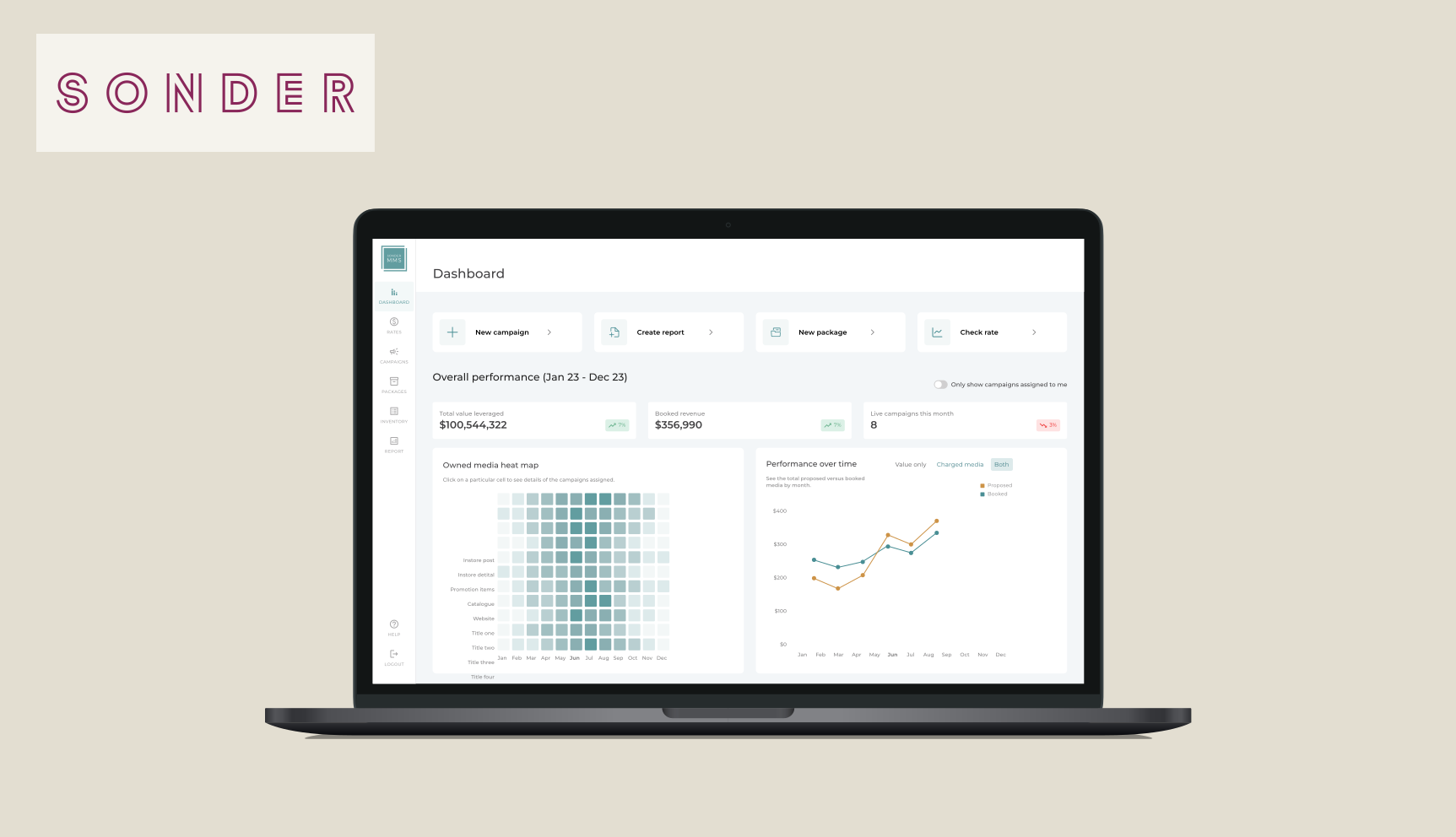
Sonder helps businesses understand the value of their owned media and put those channels to work. Today, the company reports more than $12 billion in owned media value unlocked for its clients.
Its media management platform already did what its clients needed, but the founders wanted the experience of using it to match the standard they were setting for the business.
Airteam redesigned the platform, worked alongside Sonder’s offshore development team to get it into production, then used research with Sonder’s clients to help shape what came next.
Most organisations own media channels they may not think of as media: websites, email databases, apps and physical screens.
Sonder helps businesses understand the value of those channels and put them to work. Its media management software (MMS) now manages more than $1.4 billion in annual media value.
Quick facts
Sonder brought in Airteam’s design team to redesign its existing media management platform and help plan its next stage of development.
Design and development ran in parallel, with Airteam working directly with Sonder’s offshore engineering team as designs moved into production. Following the release, Sonder reported unanimously positive feedback from clients.
The partnership then moved into its next phase: working directly with Sonder’s users to understand feature requests and turn them into a validated product roadmap.
- Client: Sonder
- Industry: Media and advertising technology
- Services: UX and UI design, workshops, user research, design and development collaboration
A small business with a big product
Sonder didn’t need to prove its product could work. It already did.
Its software was being used by some of Australia’s largest organisations, and the business wanted the experience to reflect the scale and quality of the work happening behind it.
For Sonder, that meant knowing where to bring in specialist expertise.
“Whilst we’re a small business, we want to make sure that our product is world class. So for us, we wanted to bring in experts when required, in key areas of our product build, and one of those areas is design.”
Rather than build an internal design team, Sonder looked for an external partner. Relevant experience mattered, but so did the calibre of the people who would actually be doing the work.
Airteam’s experience across media, analytics and complex data products gave Sonder confidence that our designers could understand its niche product without needing to have built exactly the same thing before.
The goal wasn’t to change what made the product valuable. It was to give that functionality a clearer, more considered experience.
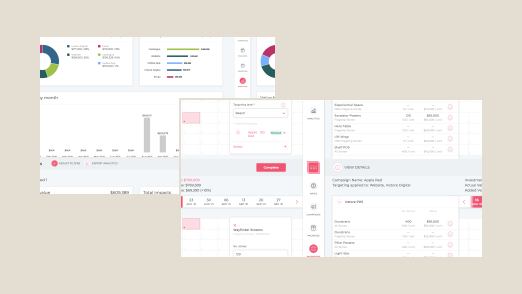
Sonder's interface before its redesign
Redesigning without stopping the build
We started with workshops to understand Sonder’s business, its users and how the existing platform worked.
From there, designs moved through repeated rounds of review and refinement with Sonder’s management team.
But development didn’t wait until every screen was finished.
Sonder’s offshore developers began implementing approved designs while Airteam continued working through the rest of the platform. The development team had direct access to our designers throughout the build, so questions about interactions, behaviours and design intent could be resolved as they came up.
For Sonder, that ongoing involvement mattered.
“There’s always that gnawing sense of, okay, the designs look great, but how is this actually going to play out when the engineers come to actually build this?”
Angus’s concern was that an external design team might disappear once the designs were handed over. Instead, Airteam’s designers stayed involved and available as Sonder’s developers worked through the build.
“When the devs are in there and working through the code, you need to be able to make decisions quickly. So we’re not stalling, we’re not holding up other components. The design team made themselves available.”
Keeping designers involved during implementation meant questions could be answered before assumptions turned into rework or held up development.
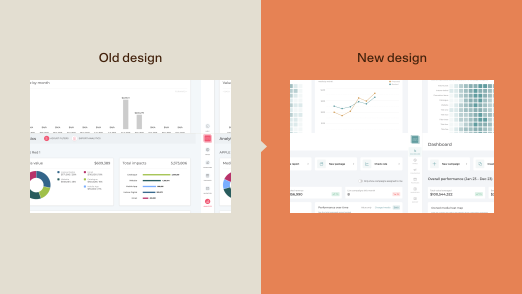
What happened after release
The redesigned platform was released to Sonder’s clients.
Internally, the founders were happy with where the product had landed. More importantly, the response from clients gave Sonder evidence that the redesign was working for the people using it.
“The feedback we’ve had from our clients since deploying all those changes has been unanimously positive.”
Clients still found the platform straightforward to use, while the redesign gave a clearer experience to the complexity happening behind the scenes.
That was an important part of the original brief: users shouldn’t need a guide to understand what to do next.
But releasing the redesign wasn’t the end of the work.
As clients used the new platform, they continued suggesting features they wanted Sonder to add. Those requests became the starting point for the next phase of the partnership.
Finding the need behind the feature request
Sonder already had a useful principle for deciding when client feedback deserved attention: don’t react to every individual request. Look for the same problem appearing across multiple clients.
Airteam’s research built on that approach.
Through workshops and feedback sessions with Sonder’s users, we looked beyond the requested feature to understand the scenario behind it: what the user was trying to achieve, where the existing product was getting in their way and whether the same need appeared elsewhere.
A client asking for a feature is useful evidence. It doesn’t necessarily tell you what to build.
The requested solution might work perfectly for that client while making the product more complicated for everyone else. Several apparently different requests might also point to the same underlying problem.
For B2B product teams, that’s a useful discipline as a platform grows: treat feature requests as evidence of a need, then design for the need.
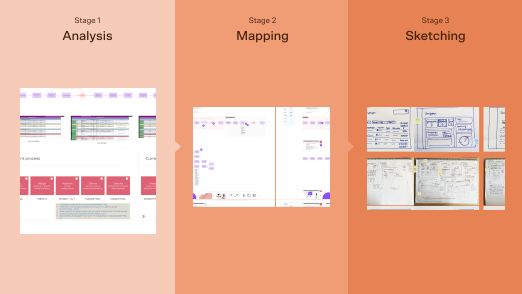
Airteam's rapid design process for new features
A product that can keep evolving
Sonder has grown considerably since our initial work together. Today, the company reports more than $12 billion in owned media value unlocked, with an average $48 million in incremental annual revenue realised by organisations optimising their owned media with Sonder.
Airteam continues to work with Sonder as the platform evolves, bringing user research and design into roadmap decisions.
The first engagement gave an already capable product an experience that better reflected the business behind it. Our ongoing partnership helps Sonder decide where that product should go next.
Sonder by the numbers
$12B+
Owned media value unlocked by Sonder
2.5B+
Monthly audience impressions
$48M
Average incremental annual revenue realised from optimising owned media with Sonder