Case study
The Children’s Hospital at Westmead
Keeping a clinical feeding guide current without waiting for the next reprint
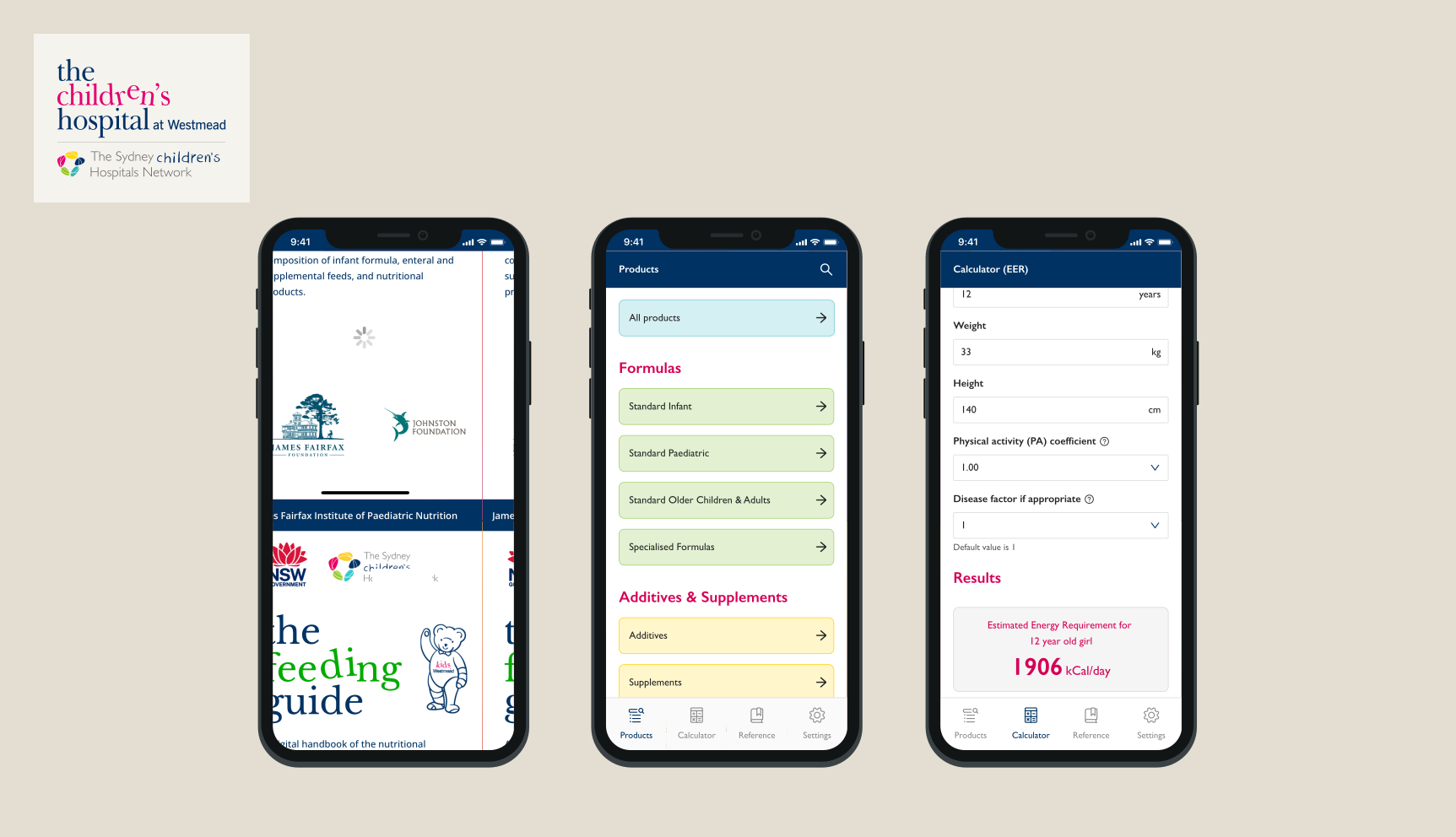
For years, paediatricians and dietitians relied on The Feeding Guide as a printed A5 booklet. But nutritional formulas don’t stand still. Products change, new ones arrive and others are discontinued.
The James Fairfax Institute of Paediatric Nutrition (JFI) at The Children’s Hospital at Westmead wanted a way to keep that information current and make the guide easier for clinicians to use.
The result is a mobile app backed by a content management system, giving JFI control over formula updates while putting clinical information and nutritional calculators in clinicians’ hands.
Quick facts
JFI moved The Feeding Guide from print to a mobile app, backed by a headless content management system (CMS). Formula information can now be updated without reprinting the guide or releasing a new version of the app, while built-in calculators replace nutritional calculations previously completed manually in spreadsheets.
- Client: The Children’s Hospital at Westmead, James Fairfax Institute of Paediatric Nutrition
- Industry: Healthcare
- Services: UX research, prototyping, mobile app development, CMS integration
When clinical information changes faster than print
The Children’s Hospital at Westmead is part of the Sydney Children’s Hospitals Network and a teaching hospital affiliated with the University of Sydney.
Its James Fairfax Institute of Paediatric Nutrition publishes The Feeding Guide, a long-standing reference used by healthcare professionals including paediatricians and dietitians. It contains detailed nutritional information about formulas available across Australia and New Zealand.
The printed guide had served clinicians for years. The challenge was keeping it current.
Every time a formula changed, entered the market or was discontinued, the guide risked falling behind until another edition could be printed. Clinicians also relied on spreadsheets to calculate nutritional values when feeds were customised for individual patients.
Moving the guide to an app created an opportunity to solve both problems.
Designing for time-poor clinicians
Airteam’s Head of UX, Nick Simpson, worked with JFI through a series of collaborative workshops to unpack the problem, explore comparable digital tools and determine what clinicians needed most.
“We took the JFI team through a series of collaborative activities to deconstruct their problem space, find inspirations and opportunities from the surrounding digital landscape, and weave together an experience that suited the core needs of time-poor clinicians - who needed quick, practical solutions to prescribe to their patients,” says Nick.
The resulting app brings the guide’s reference material and calculation tools into one place. Clinicians can access:
- A database of paediatric and adult formulas
- Calculators for nutritional and energy requirements
- Side-by-side nutritional breakdowns for comparing formulas
- Reference tables for clinical use
- Guides for managing allergies and gastroenteritis, and preparing formulas
- Filters and favourites for quicker access to frequently used information
The calculators are particularly important. Nutritional and energy requirements that previously involved manual spreadsheet calculations can now be worked through inside the app.
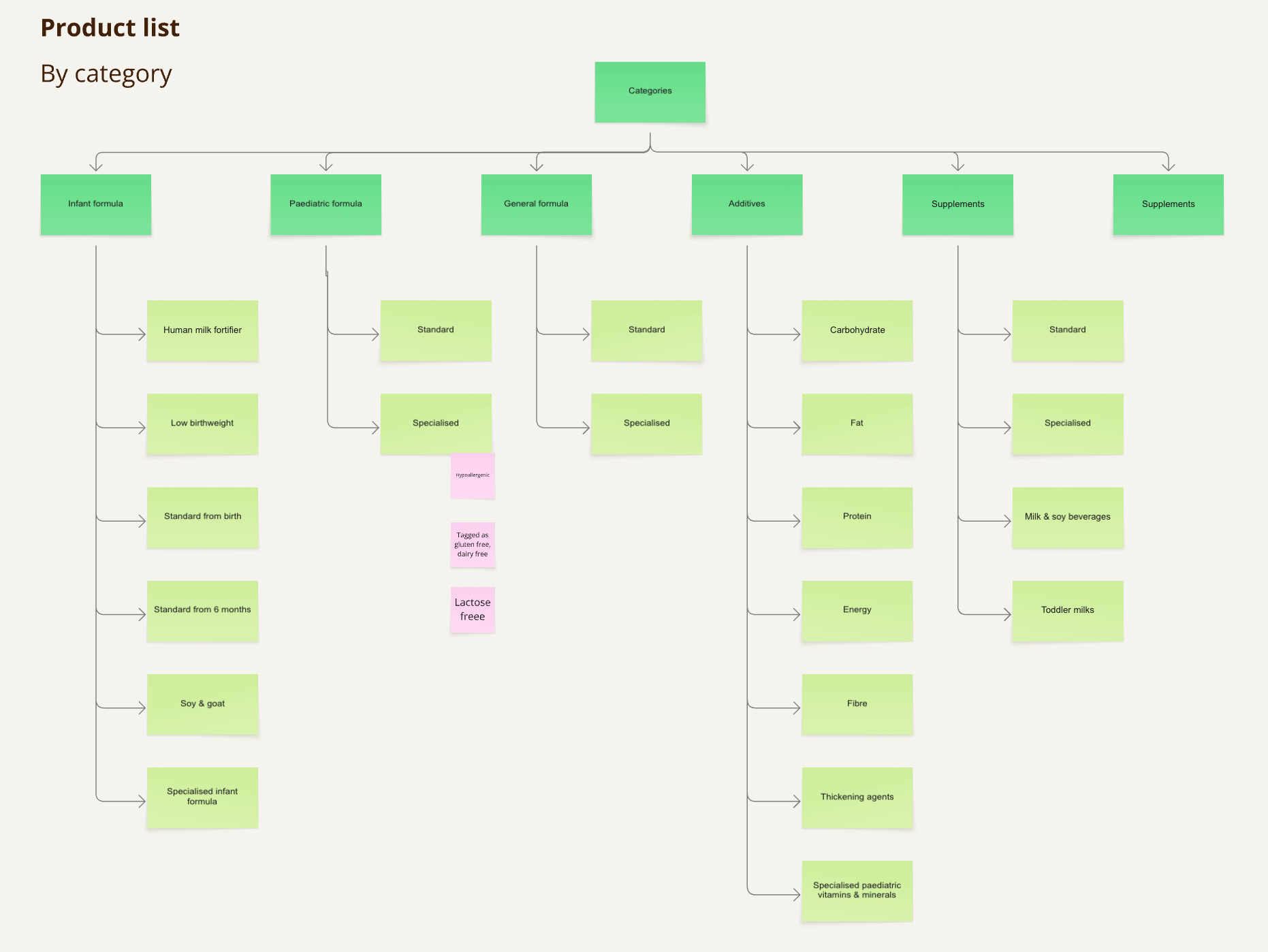
Our design process mapped out flows and interactions between screens, focusing on ease of user experience while consulting during hospital visitations.
Letting clinical content change without changing the app
Digitising the booklet solved the access problem. Keeping it current required a different architectural decision.
Formula information changes much more frequently than the app’s functionality. So instead of hard-coding that information into the app, we separated the content from the software itself.
The Feeding Guide uses Sanity, a headless CMS, to manage nutritional formulas and clinical guidance. JFI’s team can update that information directly, without waiting for a developer, an app release or another print run.
That gives the people who understand the content control over keeping it current, while the underlying app can evolve on its own schedule.
Sanity’s non-profit plan also keeps the ongoing cost of managing that content low.
It’s a useful principle for any reference or guideline product: work out what will change most often, then design the system so the people responsible for that information can change it themselves.
Built to keep evolving
The move from booklet to app gives JFI a foundation it can continue to build on.
Subscription capabilities are in development, creating a potential source of revenue to support future updates. There is also scope to expand The Feeding Guide internationally, taking the same underlying platform to a wider clinical audience.
The important shift has already happened: The Feeding Guide is no longer tied to the publishing cycle of a printed booklet.
Its clinical content can change when the evidence, products and guidance do.