Case study
Total Inter Action
Testing an AI sales coach in three weeks, before committing to a six-figure build
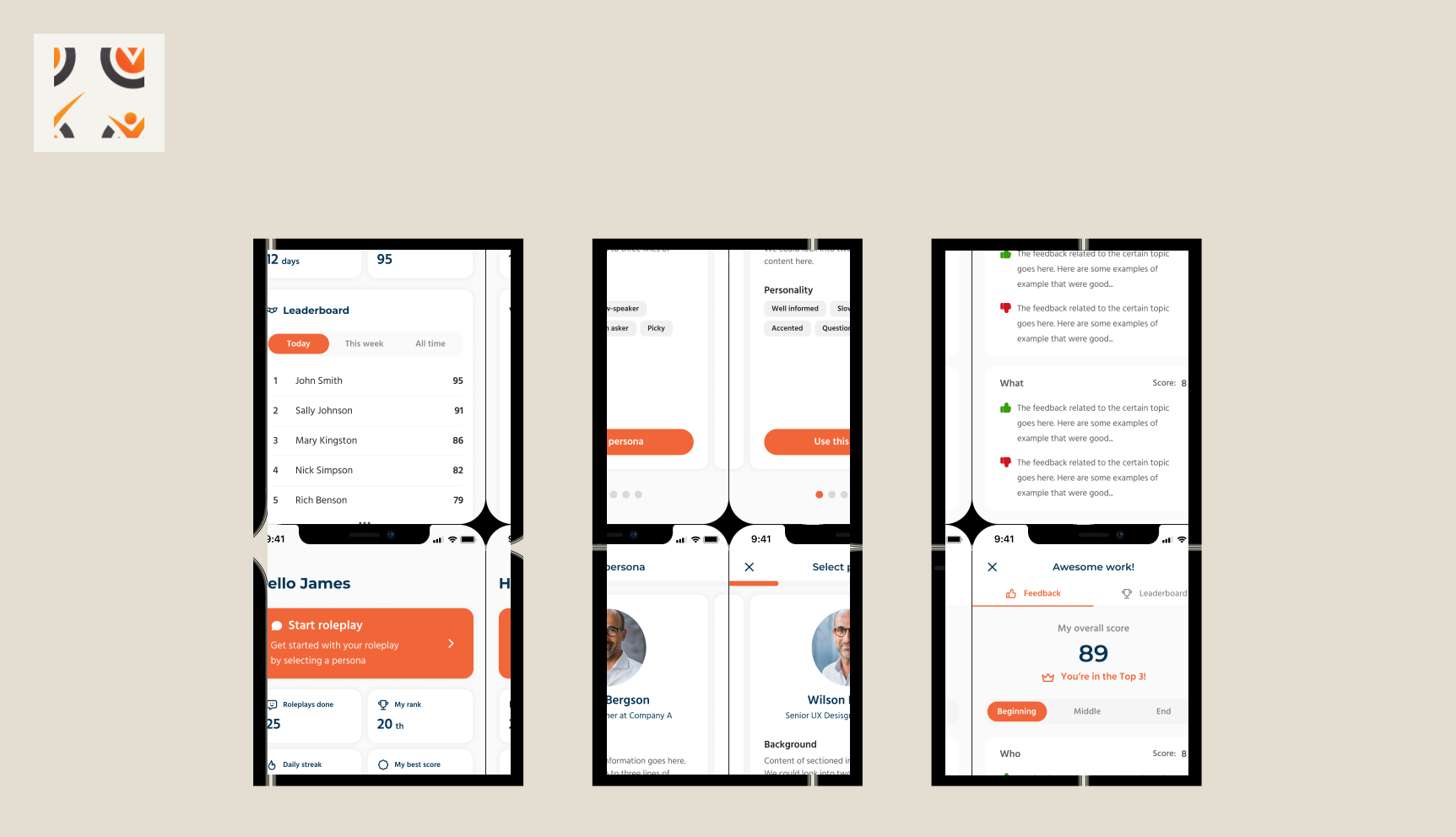
Could AI hold a realistic sales conversation and coach the salesperson afterwards? Total Inter Action answered that question with a working voice prototype - before investing in a full build.
Paul Izbicki had already tested the idea himself. He loaded a custom GPT with training PDFs and prompts, then used it to run text-based sales roleplays. His clients responded well.
The next question was harder: could the same idea work as a voice product, in real time, at a cost that made commercial sense?
Quick facts
In a three-week sprint, Total Inter Action built a working voice-to-voice roleplay prototype with multiple buyer personas and rubric-based feedback.
The prototype showed the concept was technically feasible. Just as importantly, it put numbers around the cost of each session and uncovered the reliability issues that would need to be solved before scaling.
- Client: Total Inter Action
- Industry: Leadership and sales training
- Services: AI discovery sprint, prototyping, persona design, mobile app development
Could AI scale a very human kind of training?
Total Inter Action is an Australian leadership and communication training consultancy. Its programs apply the Herrmann Brain Dominance Instrument (HBDI), a model of four thinking preferences, to help salespeople understand and respond to different kinds of buyers.
Live roleplay is central to that training. A salesperson practises a conversation, the trainer plays the buyer, and the two unpack what happened afterwards.
It works because the conversation feels real. But it also depends on having a trainer in the room.
Paul wanted to know whether AI could recreate enough of that experience to make roleplay available at scale.
A full product would require a six-figure investment. Before committing to that, Total Inter Action wanted evidence that the idea could actually work.
Four questions, three weeks
Rather than trying to build the finished product, we narrowed the sprint around four things the prototype needed to prove:
- Can AI hold a real-time, voice-to-voice sales conversation?
- Can different buyer personas behave differently enough to feel convincing?
- Can the system assess a conversation against Total Inter Action’s own training rubric?
- Can it all work inside a lightweight mobile experience that Total Inter Action can demonstrate?
Every technical choice was made with those questions - and the three-week timeframe - in mind.
- App: React Native and Expo
- Voice and conversation: GPT-4o connected through LiveKit for real-time audio
- Persona and rubric data: Pinecone vector database
- Hosting: AWS EC2, with an Express server handling secure tokens and session management
Turning a training model into a conversation
Airteam worked with Paul to map the experience against Total Inter Action’s HBDI-aligned training models.
Each buyer persona was given its own tone, objection style and behavioural profile. A salesperson chooses who they want to practise with, adds some context about the meeting and starts talking.
The AI responds as that buyer in real time.
Once the conversation ends, the system switches roles: from buyer to coach. It assesses the conversation against Total Inter Action’s rubric and gives the salesperson structured feedback on their performance.
On paper, the flow was simple. Getting AI to behave convincingly inside it was less so.
What we learned by building it
The point of a prototype isn’t to make everything work perfectly. It’s to find out what happens when the idea meets reality.
This one surfaced four useful lessons.
AI buyers can be a little too agreeable
GPT-4o tended towards polite agreement. That’s useful in plenty of contexts, but not when you’re trying to simulate a difficult sales conversation.
Prompts had to be tuned to make personas challenge the salesperson, push back and behave more like the buyers Total Inter Action’s clients encounter in real life.
Tiny replies can cause surprisingly big problems
Real conversations are full of responses like “sure”, “right” and “righto”.
Those short replies could stall the voice flow because the system didn’t always have enough information to work out what should happen next. We added guardrails to keep the conversation moving when the human didn’t give it much to work with.
Fast retrieval matters in a live conversation
The system needed to retrieve persona and assessment information without introducing awkward pauses into the conversation.
Pinecone returned that data in milliseconds, making it possible to bring Total Inter Action’s training material into the experience without noticeably slowing things down.
The cost of a conversation matters as much as the quality
A ten-minute prototype session cost around $7–15 in model usage.
At prototype scale, LiveKit, AWS and Pinecone added relatively little. But at product scale, the AI cost would have a direct effect on how Total Inter Action could price and sell the service.
That turned model cost from a technical consideration into a business-model question.
Before building a voice AI product at scale, it’s worth knowing what one successful interaction actually costs.
Evidence before investment
After three weeks, Total Inter Action had more than a demo.
It had evidence that voice-to-voice AI roleplay was technically possible, a working prototype to put in front of clients and investors, and real data about what would stand between the prototype and a scalable product.
The sprint also made the next problems clearer: reducing the cost per session, improving model reliability and finding a better way to create and manage buyer personas.
“The process felt structured but flexible, and their technical skill in AI software development really showed,” says Paul.
Crucially, those questions emerged before Total Inter Action committed to the six-figure cost of a full build.
What comes next
The next phase would focus on the things the prototype showed matter most: reliability, latency and cost.
It would also explore better testing tools, infrastructure designed for scale and alternative models or approaches to voice processing that could bring the cost per session down without losing the quality of the conversation.
The prototype didn’t answer every question. It wasn’t supposed to.
It answered enough of them for Total Inter Action to make the next investment decision with evidence rather than theory.
Total Inter Action by the numbers
3 wks
From concept to working voice prototype
$7-15
Model cost per ten-minute session
4
Core feasibility questions tested
100k+
Build investment deferred until the concept was proven